
Before the BCCTP, women diagnosed through the federal Centers for Disease Control and Prevention screening program—ineligible for Medicaid coverage yet unable to afford insurance on their own—were not eligible to receive treatment.
NBCC remains committed to ensuring everyone diagnosed with breast cancer has access to the treatment they need.
News and Resources

Background
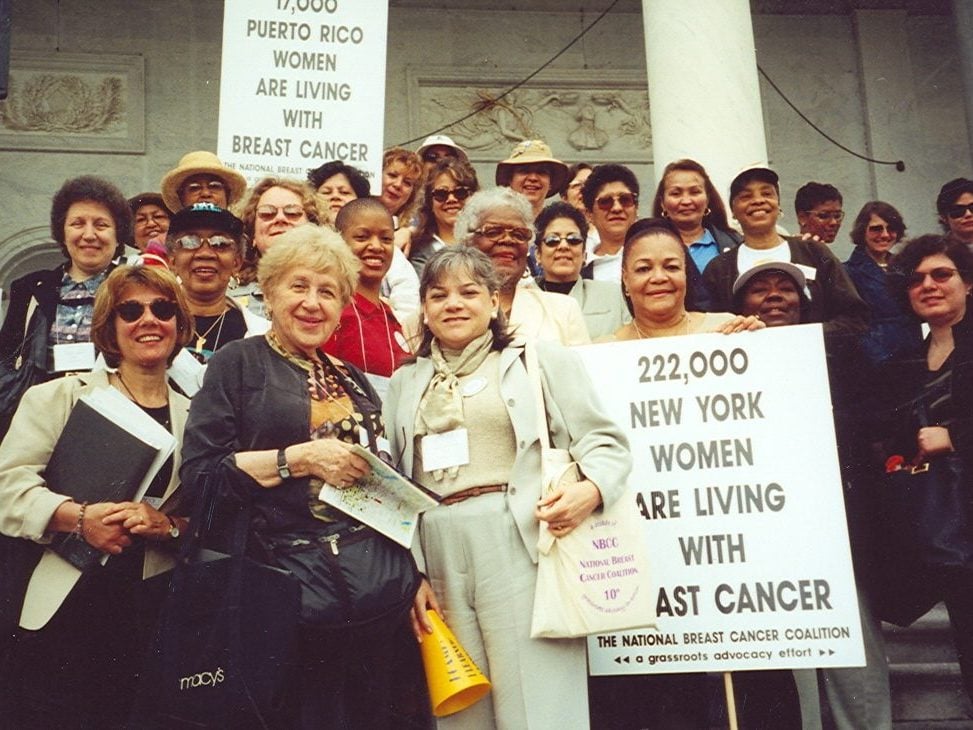
After years of NBCC grassroots lobbying and influence, Congress enacted the Breast and Cervical Cancer Treatment Act (P.L. 106-354) in 2000. This law expanded access to health care for thousands of underserved women, authorizing enhanced matching funds to states to provide Medicaid coverage to uninsured or underinsured women diagnosed with breast or cervical cancer through a federal screening program.
All 50 states, the District of Columbia, 5 US territories, and 12 American Indian/Alaska Native tribal organizations opted into the BCCTP.
Before the BCCTP, women diagnosed through the federal CDC screening program—ineligible for Medicaid coverage yet unable to afford insurance on their own—were falling through the cracks. Following diagnosis, the legacy system left them to rely on an unreliable system of dwindling charity care.
Under the BCCTP, states must extend Medicaid eligibility to those whose screening or diagnostic services were paid specifically with CDC funds. States can be more generous in expanding Medicaid coverage under the BCCTP but cannot fall below this minimum standard.
While implementing health care reform through the ACA increased access to breast and cervical cancer screening for low-income, underserved women, efforts to cut expanded insurance coverage and eliminate cost-sharing threaten this access. Even with adequate health insurance, many women will still face significant obstacles to obtaining breast and cervical cancer screening and treatment due to geographic isolation, limited health literacy or self-efficacy, inconvenient times to access services, and language barriers.
We must not move backward in our progress. We must critically examine the impact of any changes to ACA, Medicaid, Medicare, or other existing laws based on the effect these changes will have on overall access to quality care. NBCC remains committed to ensuring everyone diagnosed with breast cancer has access to the treatment they need.
Advocate Spotlight

Bethany
"My jaw hit the floor when I realized I was covered. I'd been advocating for the program, but I had no idea how far it extended."
Read more