
In 1992, in response to grassroots advocacy led by NBCC, Congress established the Department of Defense peer-reviewed Breast Cancer Research Program.
Since then, Congress has appropriated more than $4.6 billion to support this vital initiative. These funds have driven lifesaving and transformative discoveries in breast cancer research, including trastuzumab (Herceptin) and CDK4/6 inhibitors.
News and Resources
- Department of Defense Breast Cancer Research Program (DOD BCRP) Highlights
- Action Alert: Support DOD BCRP Funding
- Advocate Spotlight: Carey
- Advocate Spotlight: Kaitlyn
Background
The DOD BCRP was created in 1992 as a result of the NBCC’s “$300 Million More” campaign to increase federal funding for breast cancer research. Due to NBCC’s efforts and the Congressional leadership of Senators Tom Harkin (D-IA) and Alfonse D’Amato (R-NY) in FY1993, Congress appropriated $210 million in the DOD research and development budget for a breast cancer peer-reviewed research program administered by the Department of the Army.
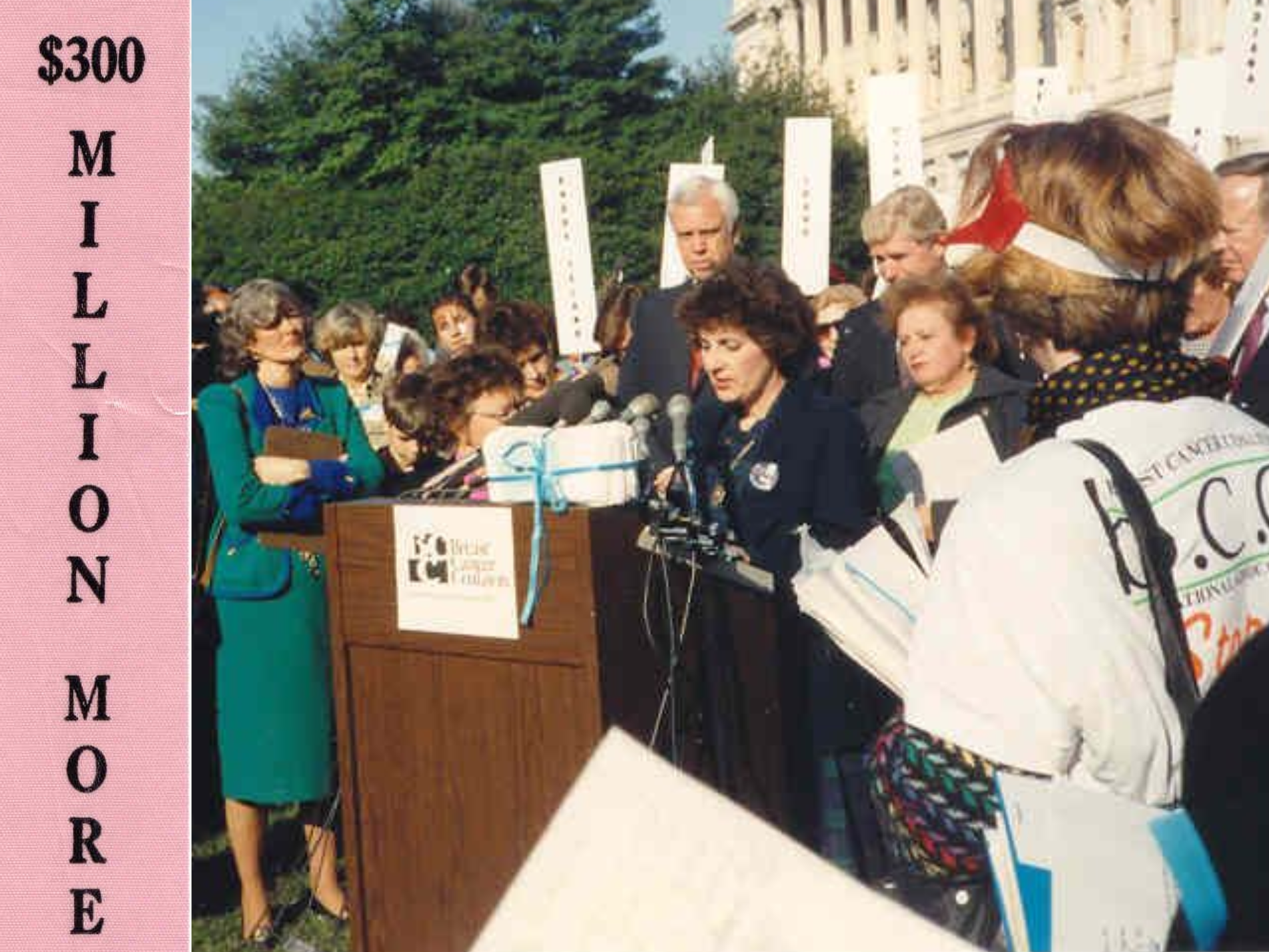
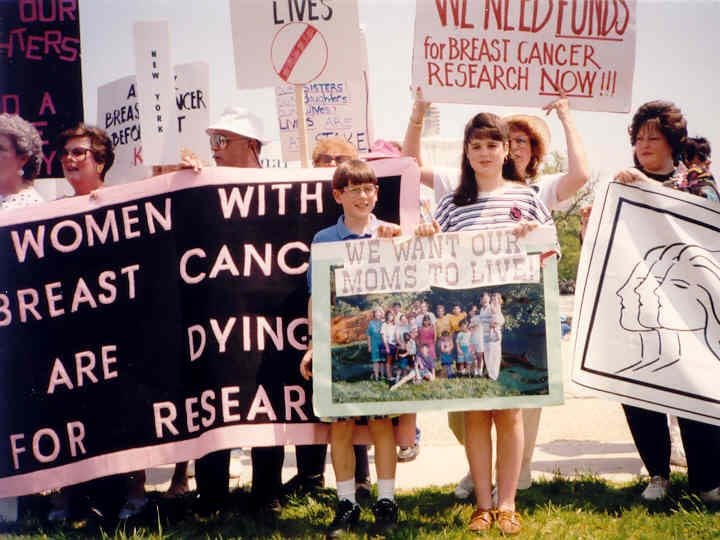
As a result of NBCC’s grassroots advocacy and the DOD BCRP’s demonstrated success, Congress has appropriated funding for it each year since. As of 2026, the DOD BCRP has provided over $4.6 billion for breast cancer research nationwide.
Since its inception, the DOD BCRP has sought to “accelerate high-impact research with clinical relevance, encourage innovation and stimulate creativity, and facilitate productive collaborations.” It has grown from a small research program to a far-reaching influential model that others throughout the cancer and broader medical research community have sought to replicate.
The DOD BCRP is:
Innovative and unique. The DOD BCRP has a unique grant structure that allows it to be more flexible than other traditional competitive, peer-reviewed medical research programs. This structure can fund innovative, high-risk, high-return research and quickly respond to current scientific advances.
The DOD BCRP can also fill gaps by focusing on promising but otherwise underfunded areas of research.
According to the Institute of Medicine, “the program fills a unique niche among public and private funding sources for cancer research. It is not duplicative of other programs and is a good vehicle for forging new ideas and scientific breakthroughs in the nation’s fight against breast cancer.”
Efficient. Due to the program’s flexibility, the Army can administer it with unparalleled efficiency and little bureaucracy. The program allows approximately 90% of appropriated funding to go directly to competitive, peer-reviewed research grants awarded to the best science.
Transparent and accountable to the public. Information on all funded grants is posted on the program website. Educated consumer advocates participate in a two-tiered process during which research proposals are reviewed for scientific quality and programmatic relevance. This consumer involvement allows grant funding decisions to be informed by trained breast cancer survivors and based on both the patient and medical communities’ concerns and needs. It provides for those who have no agenda other than to end breast cancer for everyone. This transparency allows scientists, consumers, and the public to view the progress made in breast cancer research through the DOD BCRP.
Producing extraordinary results. From new methods of extracting breast cancer cells at their earliest stages to unprecedented research into gene/environment interaction to quality-of-life issues, the DOD BCRP leads the way in generating new approaches to breast cancer prevention and treatment.
It has produced fascinating insights into the biology of breast cancer and has directly impacted lives through the research it has funded, such as the revolutionary work that led to developing the innovative drug Herceptin, which more than 2.4 million people have used in treatment.
The DOD BCRP also owes its success to the integrated efforts of its partners: the ongoing dedication of the US Army and their belief and support of this mission, the members of Congress who support the program through continued funding, the scientists and consumers who participate, and the researchers who every year submit proposals that reach the highest level asked of them by the program.

