
The National Breast Cancer Coalition (NBCC) created and leads the Artemis Project, an innovative, mission-driven collaboration of advocates and scientists working together to answer questions vital to ending breast cancer.
This unique initiative seeks meaningful solutions for individuals living with or at risk of breast cancer. Artemis brings together scientists, clinicians, advocates, and other stakeholders in an NBCC infrastructure designed to foster rapid and impactful work. Artemis members work year-round, advancing ideas rising from annual project meetings.
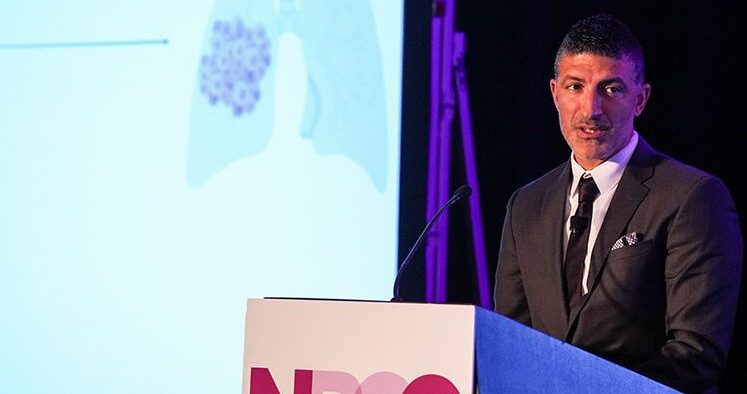
The ideas get wild. These are questions nobody else is asking, and that nobody else has. I think that’s what makes Artemis so, so special.
Dr. Cyrus Ghajar, Fred Hutchinson Cancer Center’s Laboratory for the Study of Metastatic Microenvironments
The Artemis Project Tackles Two Critical Issues
Primary Prevention: How Can We Stop Breast Cancer Before It Starts?
The Artemis Project’s first initiative is developing a safe, cost-effective vaccine to prevent all major subtypes of breast cancer. Artemis designed a vaccine that targets six tumor-specific proteins in breast cells and is on track for Phase I clinical trials in early 2027.
NBCC continues to advance our preventive vaccine in partnership with the National Cancer Institute (NCI) PREVENT program, which supports the best in cancer prevention that focuses on unmet needs not adequately addressed by the private sector.
NBCC has filed a provisional patent for the vaccine to ensure global affordability and accessibility.
Artemis participants are also exploring other primary prevention strategies, such as the microbiome and risk stratification.
Prevention of Metastasis: How Can We Prevent Breast Cancer from Becoming Lethal?
The Artemis Project’s metastasis prevention efforts focus on dormant disseminated tumor cells (DTCs), which can lead to distant recurrences decades after an initial diagnosis. Key questions include how to prevent these cells from “waking up” and causing recurrence—either by eliminating them or keeping them dormant.
Early Artemis research, supported by seed grants, has revealed mechanisms by which DTCs evade the immune system. Members are now investigating how to target these cells as well as additional strategies to prevent metastasis through novel approaches.
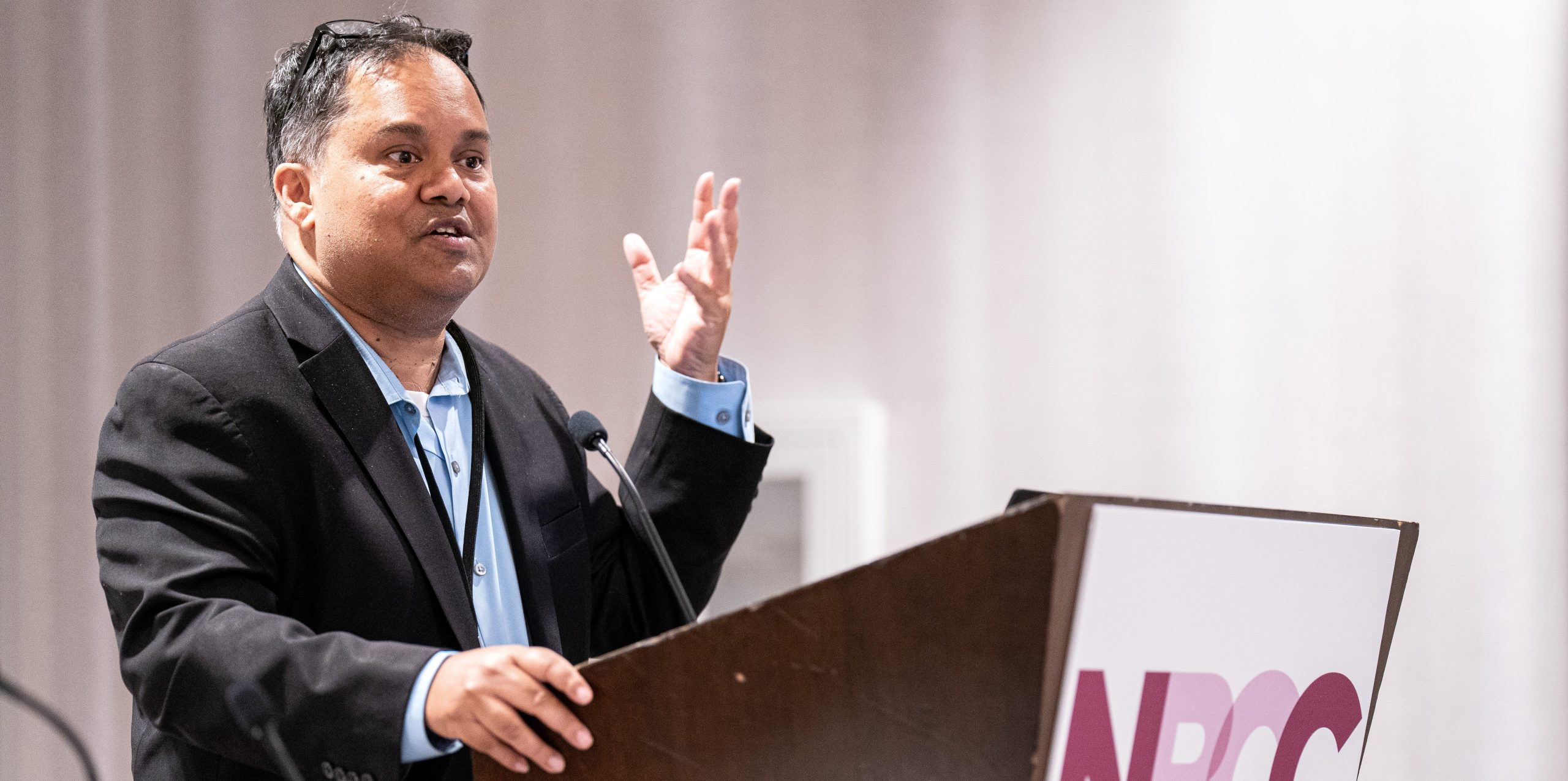
Every year we come up with crazy and amazing ideas and one of these is going to solve metastasis. I want to be in the room when that happens.
Dr. Jayanta Debnath, MD, professor and chair in the Department of Pathology at the University of California San Francisco
Featured Work
DNA.Land
Launched at an Artemis annual meeting and initially supported with an NBCC seed grant, DNA.Land created a database of genomic and phenotypic information to facilitate studies of breast cancer recurrence. Genomic data was gathered with consent from participants who had used consumer genomics companies such as 23andMe, Ancestry DNA, and FamilyTreeDNA. Participants provided their genomic information to the researchers, answered a series of clinical questions, and shared information about breast cancer in other family members. The clinical questionnaire was used to link a thorough set of clinical data with genomic data.
The complete dataset is now available through the George Washington University’s Federated Ecosystem for Analytics and Standardization Technologies (FEAST), an infrastructure that protects patient privacy and secures their data while allowing researchers access to a very valuable dataset. For access, please submit a request to NBCC’s advocate committee.
Preventive Vaccine
The idea for a breast cancer prevention vaccine was discussed at the first Artemis meeting. The vaccine, which targets six tumor-associated antigens, is now in the final stages of development under a contract with NCI-PREVENT (Cancer Preclinical Drug Development Program). A phase 1 clinical trial is anticipated for late 2026.
News and Resources
- 2025 Artemis Annual Meeting ReportPDF
- AACR 2026 Artemis Poster Presentation
- DNA.Land Poster Presentation
Artemis Project Milestones
2026
NBCC, in partnership with Mayo Clinic, plans to launch the Phase I trial.
2025
2024
NBCC partners with NCI’s Computational Genomics and Bioinformatics division, the Center for Biomedical Informatics and Information Technology, and George Washington University’s research team to anonymize and securely host DNA.Land data on the university’s cloud-based platform, GW-FEAST.
NCI PREVENT contracts with a manufacturer for the plasmid component of the preventive vaccine.
2023
NCI PREVENT contracts with a manufacturer for the MVA component of the preventive vaccine.
NBCC files additional international patents for the vaccine, following the filing of a provisional US patent in 2020 and an initial international patent application in late 2022.
2022
2020
NBCC’s Artemis Project preventive vaccine was awarded a contract with the National Cancer Institute (NCI) as part of its competitive PREVENT Cancer Preclinical Drug Development Program. The PREVENT program is a peer-reviewed agent development program designed to support the pre-clinical development of innovative interventions and biomarkers for cancer prevention and interception towards clinical trials.
2019
2018
A pre-Investigational New Drug (IND) information package was submitted to the Food and Drug Administration (FDA). NBCC, Mayo, and Artemis members participated in a call with the FDA to discuss the pre-IND and plans for a Phase I safety trial.
2017
NBCC partnered with the New York Genome Center to develop a large-scale resource to study breast cancer. The DNA.Land project, supported by an Artemis Project seed grant, asked participants in genealogy tests to answer questions about breast cancer, including family history. This genomic data, along with answers from a breast cancer questionnaire developed by NBCC-trained advocates and researchers, will be used to develop a large-scale database that researchers can use to identify genetic variants that impact the risk and recurrence of the disease.
Dr. Cyrus Ghajar, director of the Laboratory for the Study of Metastatic Microenvironments at Fred Hutchinson Cancer Research Center, and Dr. H. Kim Lyerly, George Barth Geller Professor of Cancer Research, Duke University School of Medicine, receive a seed grant to determine whether the adaptive immune system can recognize and kill dormant disseminated tumor cells (DTCs), and if not, which aspect of DTC biology should be targeted to enhance T cell recognition.
2016
Dr. Keith Knutson, professor of immunology at the Mayo Clinic College of Medicine, begins pre-clinical work on the Artemis Project preventive vaccine.
2015
Artemis published reports on its annual meetings on prevention of metastasisPDF and a preventive vaccinePDF, respectively.
2014
Artemis held its first annual meeting on the prevention of metastasisPDF and another on a preventive vaccinePDF.
2013
Dr. Paul Ewald, professor of biology and director of Program on Disease Evolution at the University of Louisville and Dr. Vladimir Belyi, assistant professor at the Cancer Institute of New Jersey, Robert Wood Johnson Medical School receive a grant to take a systematic look through two sets of breast cancer genomes for evidence of infectious agents.
Dr. Gregory Hannon, professor and HHMI Investigator at Cold Spring Harbor Laboratory, and Dr. H. Kim Lyerly, George Barth Geller Professor of Cancer Research at Duke University School of Medicine receive a grant to look for vaccine targets in ductal carcinoma in situ (DCIS) samples and to evaluate the biology of human DCIS through sequencing (RNAseq).
Artemis held its first meeting on tumor dormancyPDF and its third on the preventive vaccinePDF.
2012
Through the generous support of the Breast Cancer Fund of National Philanthropic Trust, NBCC begins awarding seed grants for promising research projects.
Dr. Paul Spellman and Dr. Joe Gray of Oregon Health and Science University receive a seed grant to identify possible vaccine targets using existing and developing human genomic data within different breast cancer subtypes. The analysis generated a prioritized list of potential breast cancer-specific targets to be considered for incorporation into a preventive vaccine.
Artemis held its second preventive vaccine meetingPDF.
2011
NBCC held its first Artemis Project for a Preventive Vaccine meetingPDF.
2010
NBCC launches the Artemis Project, an advocate-led research initiative.