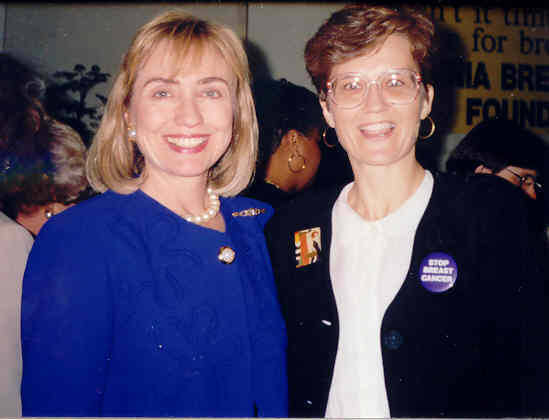
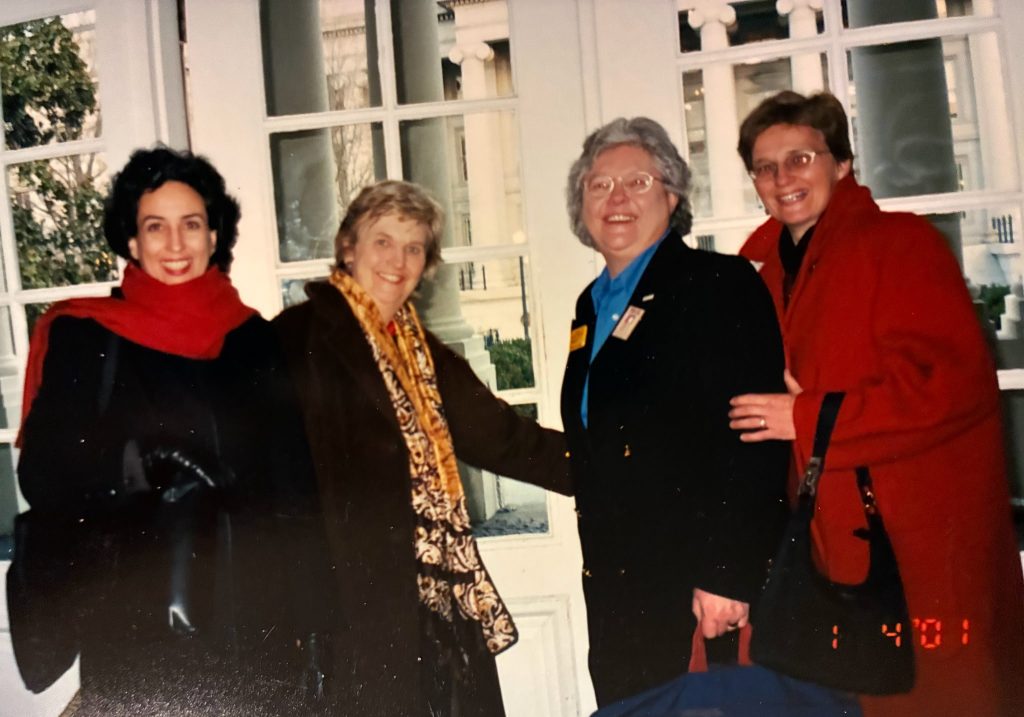
Kay Dickersin, a brilliant, driven, compassionate, creative advocate and a great scientist, passed away on Sunday, November 1, 2026.
Her passing is felt deeply across the advocacy and research fields.
“Taddy had a hand in just about everything NBCC did. Without her, we would not be the science-driven, evidence-based advocacy organization we are,” said National Breast Cancer Coalition (NBCC) President Fran Visco. “She believed so strongly in advocate involvement, in diversity and inclusion, and in speaking out without fear. She embodied all of that. And she was compassionate, fun, and a mentor to me and so many NBCC leaders.”
When Kay—Taddy, as she was known to almost everyone—was diagnosed with breast cancer in 1986, she sought community in local support groups. A lifelong advocate, Kay was unable to find a group that confronted the realities of breast cancer and empowered patients to make informed choices about their health, so she decided to create one. In partnership with nurse and fellow survivor Martha Oakley, Arm-in-Arm launched in 1989.
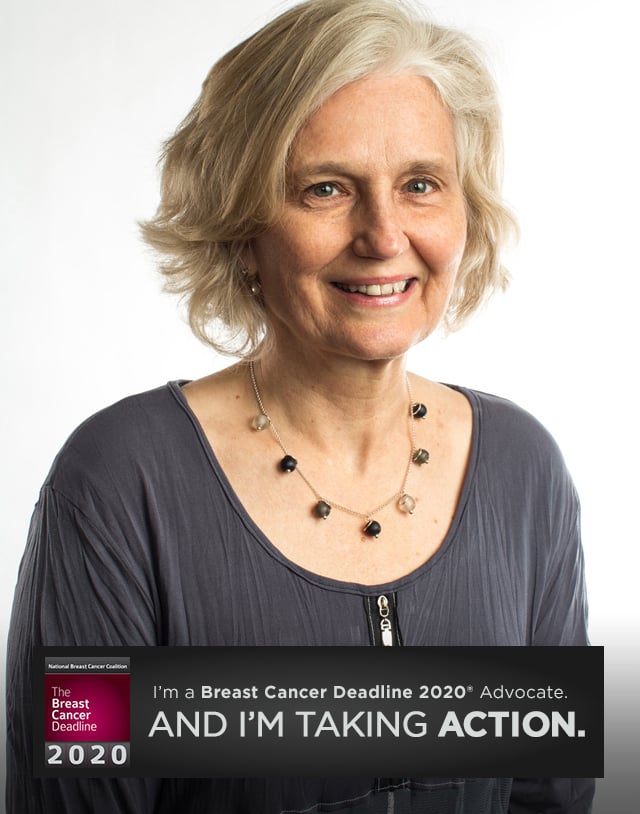
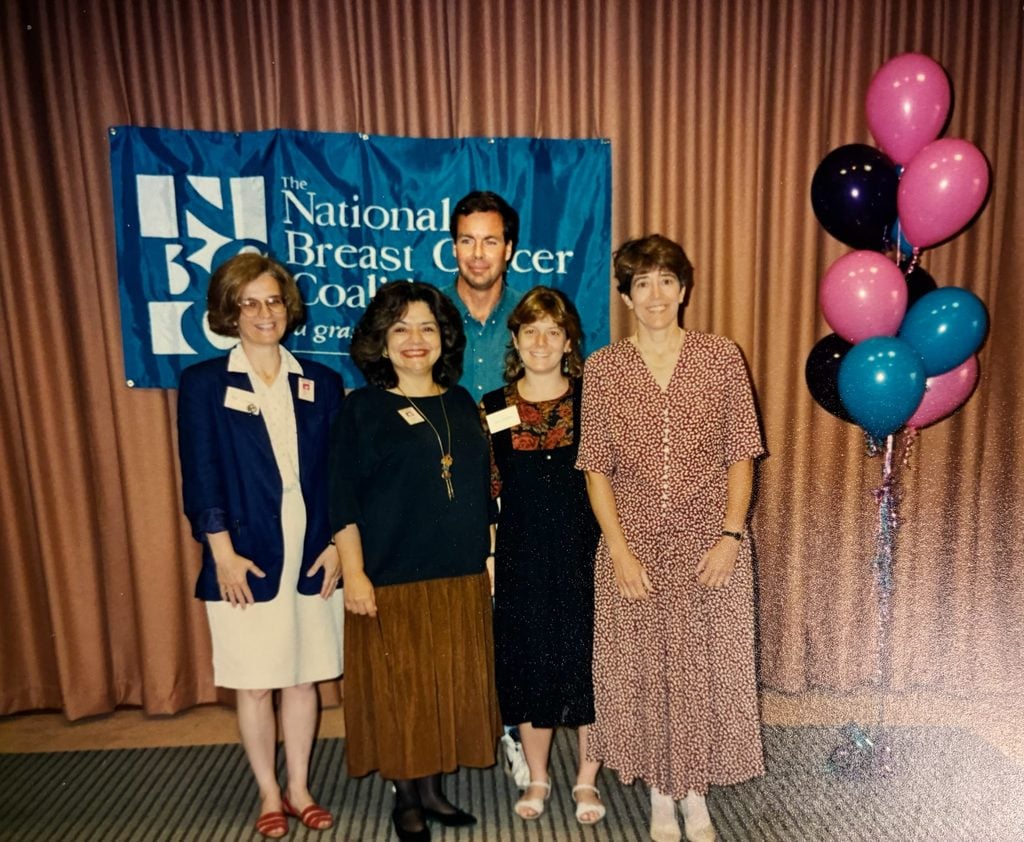
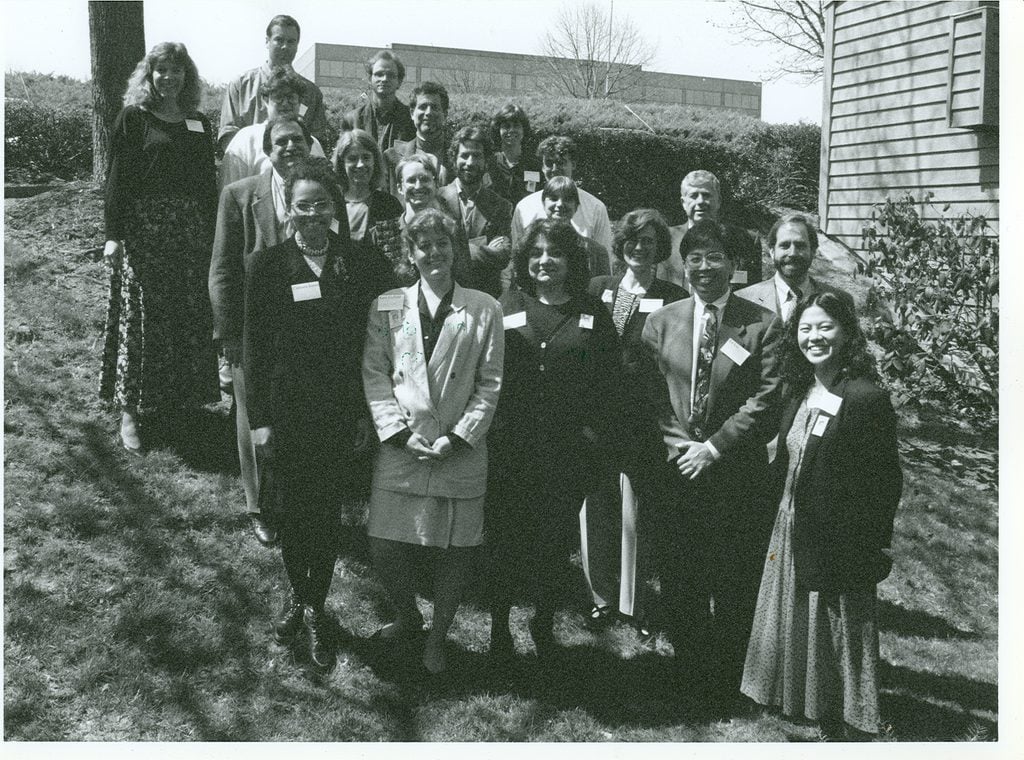
Two years later, Kay was part of a small group of advocates who came together to form NBCC. With a master’s in cell biology and a then in-progress PhD in epidemiology, Kay volunteered to support NBCC’s science arm, teaching advocates the basics of biostatistics and epidemiology to strengthen their activism. She brought other experts to educate NBCC’s board, because she believed we deserve a seat at all tables that influence breast cancer, and we had to know what we were talking about to bring about meaningful change.
From there, Project LEAD, NBCC’s premier breast cancer science training program, was born. More than 2,800 advocates have completed the program to date.
“Taddy Dickersin’s spirit, scholarship, and vision infused NBCC’s world-class advocate science training program, Project LEAD,” said Annette Bar-Cohen, former executive director of NBCC’s Center for Advocacy Training. “When I was the program’s director, I depended on her clear evidence-based stance even as political, emotional, and financial pressures created moments of conflict.”
A founding member of the Cochrane Collaboration and Consumers United for Evidence-based Healthcare, Kay was also a global leader in advancing evidence-based health care and patient advocate involvement in research, which became two tenets of NBCC’s work.
“Taddy was so encouraging to all advocates who wanted a seat at the table,” said Joy Simha, NBCC advocate, cofounder of the Young Survival Coalition, and NBCC board member. “She motivated us to be a part of this very complicated research world.”
Taddy made an indelible mark on how NBCC advocates view science, advocacy, and our mission. We will miss her.
Remembering Kay Dickersin, “A Gifted Teacher, Fierce Advocate, and Delightful Colleague and Mentor”
Sara Collina, former director of special projects at NBCC
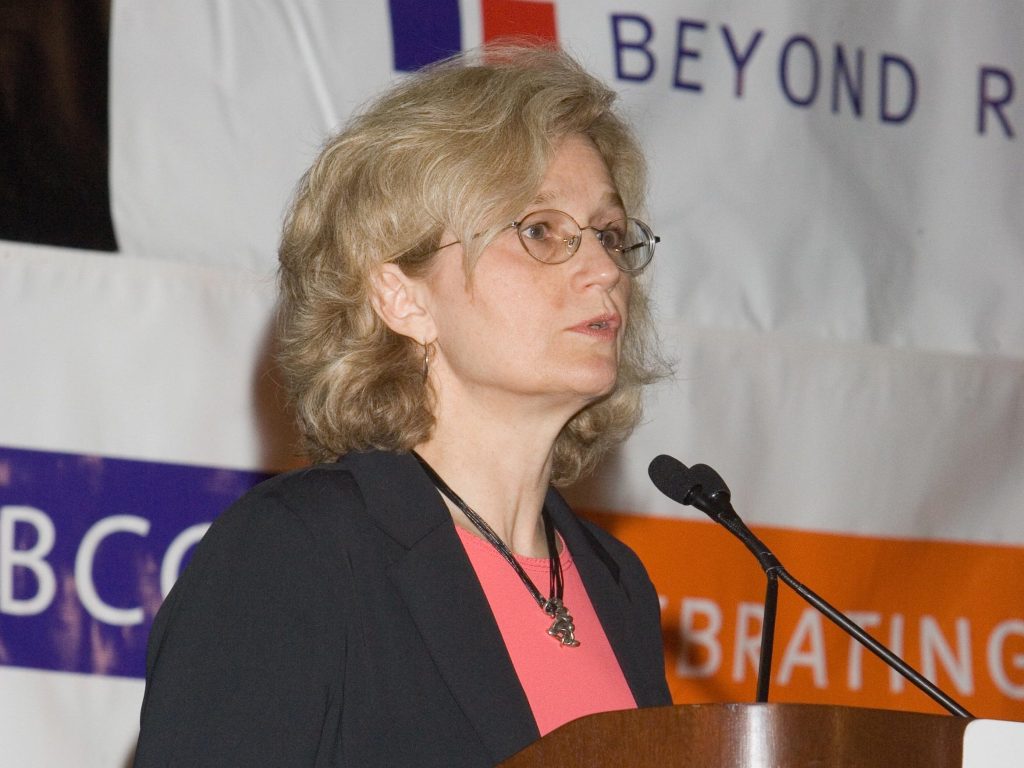
I met Taddy in my first week of work at the National Breast Cancer Coalition (NBCC). I knew that she had served as a scientific advisor to the NBCC board. I also knew she had recently given a primer on how to read and understand scientific journal articles, and it was such a hit that other advocates wanted a similar crash course. My job was to help launch a new program called Project LEAD, which would empower breast cancer advocates with the language and tools of science.
I drove from DC to Baltimore, excited and a bit nervous, but breathed a sigh of relief when we met. What a sweetheart! So welcoming and kind. Then I opened my brand-new file and pulled out a note from a pharmaceutical company. They had written to us saying they wanted to contribute to our skeleton budget and had “just a 5-minute” presentation they wanted to share during the session.
“Oh, then I quit!” she said.
Oops. I quickly explained that I was brand new, no one had said yes to anything, and… and… and…
After a long conversation about conflict of interest, the powerful ways industry shapes our research and the integrity of scientific research, I managed to convince her not to quit, I managed to keep my job, and for the next decade I learned from, laughed with, and grew to love Dr. Kay (Taddy) Dickerson.
I never knew anyone so committed to evidence-based medicine; I quickly understood this to be the core value that would shape everything we did. I knew scientific research mattered, but Taddy taught me it can be done well or badly—by anyone. Neither the name of the journal nor the prestige of the researcher’s employer could tell you if research claims were reasonable. You can’t focus only on the research that gives you an answer you like. No getting excited about one tiny trial that wasn’t powered enough to tell us anything. Real medical science was rarely a simple headline, and the world of breast cancer was always looking for headlines.
Designing Project LEAD was a labor of love, and Taddy was not just a great epidemiologist but a gifted teacher who believed deeply in the power of learning —and the power of advocacy.
- But can someone who hasn’t taken a math class in 30 years understand epidemiology?
Of course. - What about all the jargon?
Oh, that’s just a combination of shortcuts (we all know what that means) and arrogance (don’t I sound clever?). - How can we understand all these charts and graphs?
Well, start with the ones that matter. - But we’ll never know enough.
No, you won’t, but neither does anyone. You don’t need a mini-PhD; you just need enough knowledge to ask good questions.
She could be, um, stubborn. Did I mention that she almost quit the first time I met her? At our first gathering of Project LEAD teachers, we broke into “epidemiologists” and “basic scientists.” By lunch, the basic scientists had developed a basic curriculum. The epidemiologists, meanwhile, were still arguing about terminology. Words matter, she explained.
Some things mattered to Taddy that I didn’t understand at first. She was adamant that lectures were insufficient; we needed lots of breakout sessions with specific learning activities. We needed facilitators in every session to keep everyone on track. Teachers simply could not use acronyms. If you can’t explain it clearly, you don’t understand it well enough. We certainly did not invite all the teachers to return.
Taddy may have been a sweetheart, but her standards for teaching were extremely high. In the 30 years since, I have become a college teacher who has incorporated every lesson from Taddy into my work, and am so grateful to have had the chance to learn from her.
Taddy hated the “mammograms save lives” slogan, so if a teacher said it, she would later step in with a special session on lead time bias, false positives, and the risks of overdiagnosis. Breast cancer screening and diagnosis are not simple, and Taddy simply would not insult our students by suggesting otherwise.
For a few years, we held four or five Project LEAD sessions around the country. During that time, I gave birth to my first baby, and then my second (oh, and a little later, my third). Taddy was kind, respectful, and supportive of my little ones and me in every way. The idea that I couldn’t be a mom of infants (did I mention that I brought them to every session?) and also be a fully engaged, competent project manager never crossed her mind. I got to do it all, because of the culture Taddy helped create.
I remember staying up late during Project LEAD sessions, reorganizing the curriculum based on what the other teachers missed and what confused the students. As the evening progressed, everything started to feel funny. In one session, we managed to light a fire in the back of the room; in another, we got a complaint from a manager when a student stripped down in the lobby to show off her new breasts.
Once, when Taddy used the word “statistics,” one of the students looked aghast, then stood up and walked out. I think after that we found another way to describe collective and analyzing data.
When I look back on those years, it felt like we had a little family—or perhaps it was a traveling circus? We went across the country working with hundreds (and ultimately thousands) of breast cancer survivors, showing them why simply fighting for “more care” or “more money” would not get us where we wanted to go. Some were just months out of treatment; some were actively dying. All had difficult stories to tell.
Taddy knew these breast cancer survivors’ lived experience mattered, and she knew it was a form of expertise that the scientific community sorely needed. I remember being in the room with her when she told them this, then looking around and thinking, “When she says it, they really hear it.”
I remember one particular conversation that really struck me. Because she was both a scientist and a breast cancer survivor, she was often invited to serve as “the voice” of the breast cancer survivor. She did not appreciate that role. Why not? I asked.
“We need fresh perspectives, and that requires non-scientists (‘lay people’ or ‘consumers’—the terminology was always a little awkward). I can’t stop being a scientist, and scientists need to stop just talking to each other.”
It was never about her breast cancer, or even her expertise. It was about getting the research community out of their cloistered hibernation so they could actually end breast cancer.
Project LEAD grew, NBCC grew, and Taddy continued to be a fierce advocate for evidence-based medicine and evidence-based teaching. I often called Taddy to solve problems. (Fran Visco, the head of NBCC, would often respond to my urgent emails with “call Taddy.”).
“This teacher was a no-show; can you cover? Everyone wants to know about X new drug; should we incorporate it into the curriculum… in the next 48 hours? This hotel doesn’t ‘exactly’ have breakout rooms; that student would like to sell snake oil during the break; the binders never arrived…”
She could be counted on to be both loving and an amazing problem solver.
Taddy introduced me to the Cochrane Collaboration, which profoundly expanded my understanding of how real people can make real sense of research. Once Taddy invited me to a Cochrane Collaboration conference, I remember dropping her name proudly. “Oh, you know Dr. Dickersin? She’s amazing.” Everywhere I turned, there were Taddy fans. Of course there were.
Much later, Taddy and I did a project together at the Patient-Centered Outcomes Research Institute (PCORI). PCORI’s mission was based in large part on NBCC’s work empowering patients to engage in research. As a brand-new organization, it was going through growing pains. Who should be at the table to ensure research would be “patient-centered”? Who exactly was a patient “advocate”? Is that different from a patient? Could it be a scientist who happened to also experience a health condition? Could it be a doctor with a family member who was a patient?
Taddy fiercely advocated for a vision of patient-centeredness that brought truly new perspectives to the table. She also fought for transparency and accountability at every level of the organization, and never backed down from her vision of meaningful patient engagement. Oh, and once again, we had a lot of fun.
Taddy shared a precious time in my life, which was also a highlight of my professional career. A gifted teacher, a fierce advocate for evidence-based medicine, and a delightful colleague and mentor, Taddy will always have a special place in my heart. Thank you, Taddy, for sharing a bit of your beautiful life with me.