
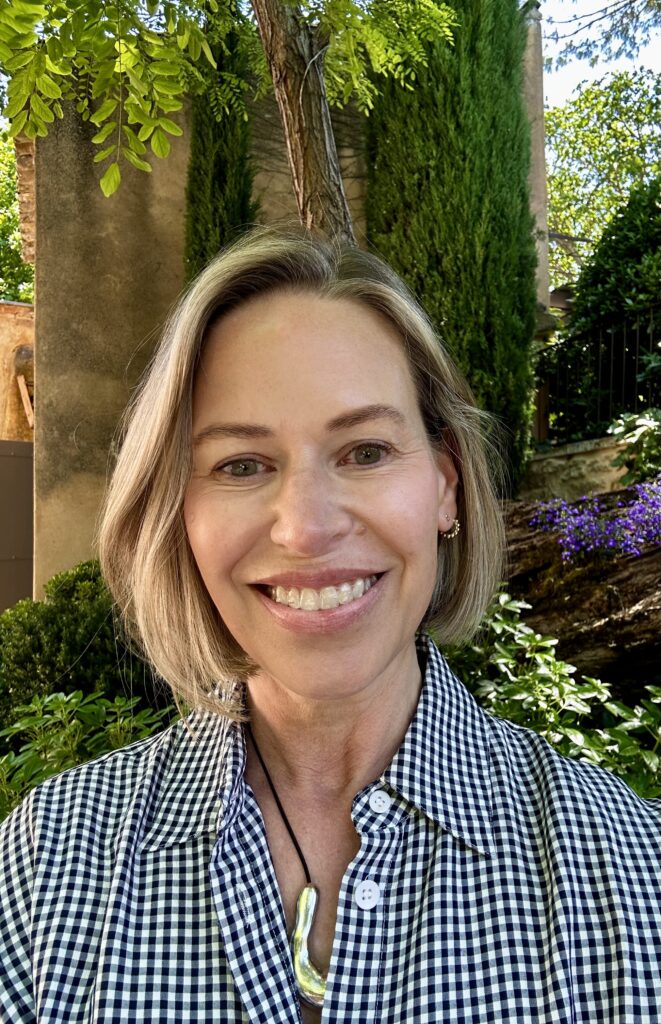
 Participating in NBCC’s Project LEAD definitely marked a turning point in my advocacy journey.
In April 2012, I was diagnosed with triple-negative breast cancer, and I will never forget that phone call. I was on my way to pick up my children from school when I had to pull over because I literally felt like I couldn’t breathe. The next morning, I woke up with one overwhelming thought: I would never feel carefree again.
Even though I worked in healthcare, I felt completely overwhelmed by the diagnosis and the decisions ahead. Thankfully, I was able to meet with my surgeon within a few weeks, and she introduced me to the I-SPY Trial. While the idea of participating in a clinical trial initially felt intimidating, it ultimately gave me something I desperately needed during an incredibly uncertain time: a sense of support, structure, and control.
Over the years, I found myself supporting other women newly diagnosed with breast cancer, helping them navigate the fear and uncertainty that I knew so well. Today, 14 years after my diagnosis, I work as a breast cancer research advocate on the very same trial I once participated in – a role that feels deeply meaningful and profoundly full circle.
But while I knew my lived experience mattered, I also realized that if I wanted to contribute more meaningfully at the research table, I needed to strengthen both my scientific understanding and my confidence in using my voice. That realization ultimately led me to Project LEAD.
As a research advocate on and past participant in the I-SPY 2.2 Trial, I have often found myself sitting in meetings with the very doctors and scientists who saved my life, feeling both honored to be there and, at times, intimidated to use my voice. I knew my lived experience mattered, but challenging perspectives or asking deeper scientific questions sometimes felt daunting. Project LEAD changed that.
The rigor of the coursework was challenging and energizing, and for the six days I attended, I fell into bed each night exhausted and exhilarated. We were immersed in cancer biology, clinical trial design, and the complexities of research in a way that demanded focus and commitment.
But more than just learning facts, Project LEAD gave me a new framework for understanding the biology of cancer and the research process. I wasn’t just following along anymore; I was actively engaging. I was learning to speak the same language as researchers, and that growing understanding gave me the confidence to ask questions, share insights, and advocate more effectively. In the process, I found my voice.
Just as impactful as the coursework was the camaraderie. Being surrounded by advocates who each carried their own personal journeys with breast cancer created a uniquely supportive environment. We shared stories, learned from one another, and witnessed firsthand the power of a group united by a common passion: ending breast cancer. The mentors and researchers who guided us were generous with their time and knowledge, and their openness reinforced that advocates truly belong at the research table. I returned home inspired not only by what I had learned, but by the collective energy and commitment of this community.
I came home from Project LEAD with renewed motivation and a deeper sense of purpose, and since then, my advocacy work has expanded in meaningful ways. I joined the Patient Advisory Council for BreastCancerTrials.org, where I contribute to efforts aimed at making clinical trials more patient-centered and accessible. I also participated in the UCSF PeerTalk video program, sharing my experience to support and inform others navigating breast cancer, and more. These opportunities have allowed me to translate what I learned at Project LEAD into tangible impact.
Project LEAD inspired me to bridge the gap between complex science and the people whose lives are directly impacted by it.


