
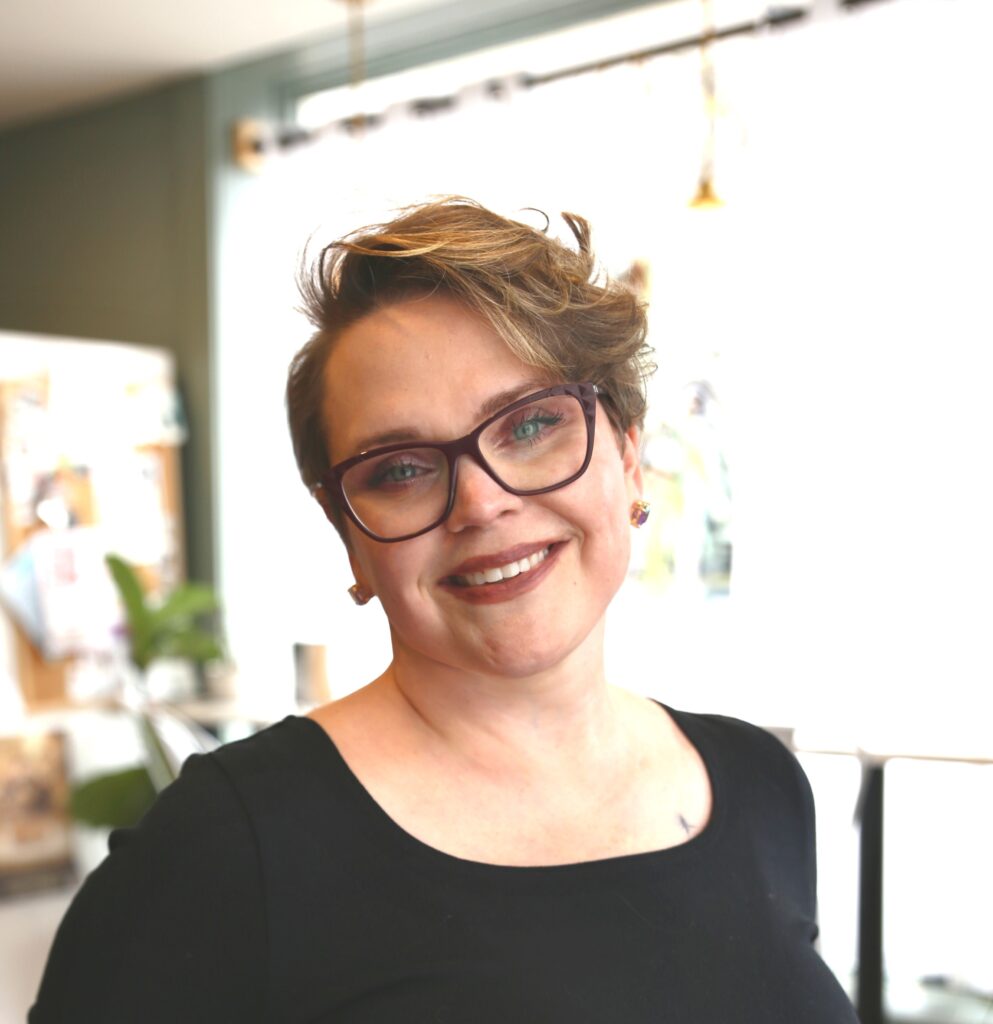
 There is a version of me that almost never showed up.
She was a caregiver and mother first, a patient second, and somewhere in between those two identities, a woman who had convinced herself that all the big conversations were not hers to join. She ran a mom group. She loved her family. She was committed to serving her community and raising her babies. She told herself that was enough because one more thing was nothing she could handle.
Then that woman got a cancer diagnosis. And everything changed.
I walked into the same cancer center my mother went to for her last appointment, wanting to believe that I had an advantage. I spent years navigating the healthcare system as a caregiver. I thought I knew how it worked. But at every turn I felt out of my depth, overwhelmed, and quietly I fell through the gaps. And I kept asking myself: if I feel this lost with everything I have—a supportive partner, a community, years of experience—what happens to the people who have none of that? How can we make this better for everyone?
That is a question I never stop asking myself. And that’s what led me to learning more through Project LEAD and becoming a breast cancer activist.
Recent advocacy highlights:
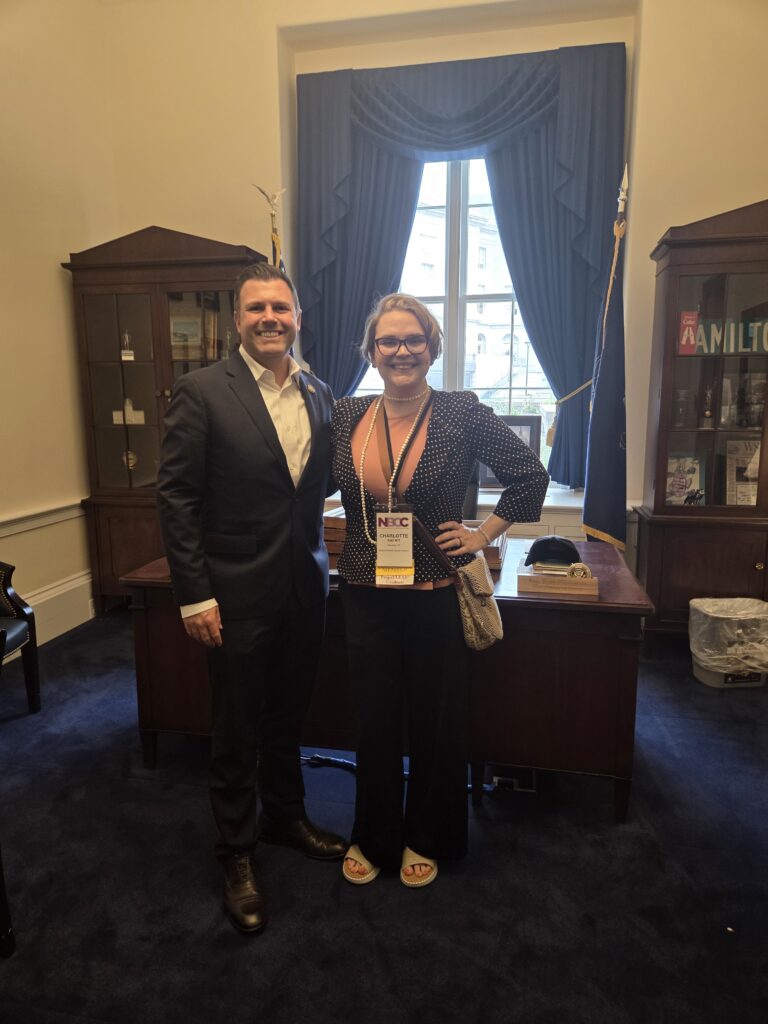 This past year I traveled to Washington as Pennsylvania’s sole NBCC advocate for Lobby Day. I carried my mother’s story and my own. I carried everyone who could not make the trip. It is always the heaviest bag I pack.
NBCC has secured and who now sit at every table where breast cancer decisions are made. That funding matters more than most people realize. When , the scientists driven by genuine desire to find a cure, not by a boardroom’s quarterly priorities, lose the freedom to follow the science wherever it leads. That is the difference between a treatment and a cure. NBCC understands that distinction in a way very few organizations do, and it is why I keep showing up.
How Project LEAD helped further Charlotte’s advocacy:
Project LEAD gave me the language to match my passion. It taught me how to read a clinical trial, how to evaluate research, how to sit across from a legislative aide, a pharmaceutical representative, or a scientist and ask questions that cannot be dismissed. But it also gave me something harder to quantify: a deep and unshakeable understanding that patient voices do not just belong in these conversations, they are essential to them. We are not guests at that table. We are a necessary part of what makes the work real.
Attending Project LEAD confirmed something I had only begun to believe about myself – that I was built for this. It helped me recognize that becoming a certified advocate was not just a credential. It was a key. A key to scientific research conversations, to federal funding discussions, to rooms where the decisions that affect my breast cancer siblings across Pennsylvania and this country are made.
I no longer walk into those rooms wondering whether I belong there. Project LEAD gave me the confidence to not only sit down at the table but pull up a chair and make space when I need to be heard.
Charlotte’s advice to fellow LEAD graduates:
Remember you are never alone. When we walk into spaces with powerful people, we walk in carrying the strength of every voice that came before us. We stand there because of every advocate who fought to the end, every loved one who donated their last dollar, every scientist who dedicated their life to finding answers, every person who could not be in that room but needed someone to speak for them. That is us. We are them.
I once felt small in these rooms. I questioned whether I had anything to give, whether someone else deserved the stage more than I did. But I have learned that every story matters, including our own, and showing up, is exactly what gives us power.
The advocates we honor at the start of every NBCC gathering did not wait until they were ready either. They showed up with whatever they had, and they changed things. We owe them the same courage. We fight so our children don’t have to.


